

How Samsung’s Solve for Tomorrow Program Turns AI Anxiety Into Youth Ingenuity

Artificial intelligence is having a moment — a loud, unruly, impossible-to-ignore moment. It’s the thunderclap in every boardroom, the whispered worry in every classroom, and the headline nobody can escape. And with every new advancement, the chorus of questions gets louder: Where’s this going? Who’s in charge? Are we even ready?
But walk into a classroom participating in Samsung’s Solve for Tomorrow program, and you’ll find none of the hand-wringing and philosophical angst dominating the adult world. Instead, there’s an air of grounded optimism — students rolling up their sleeves, diving in, and treating AI like something far less mystical: a tool. And not a tool for ego or spectacle, but for solving real problems in their communities.
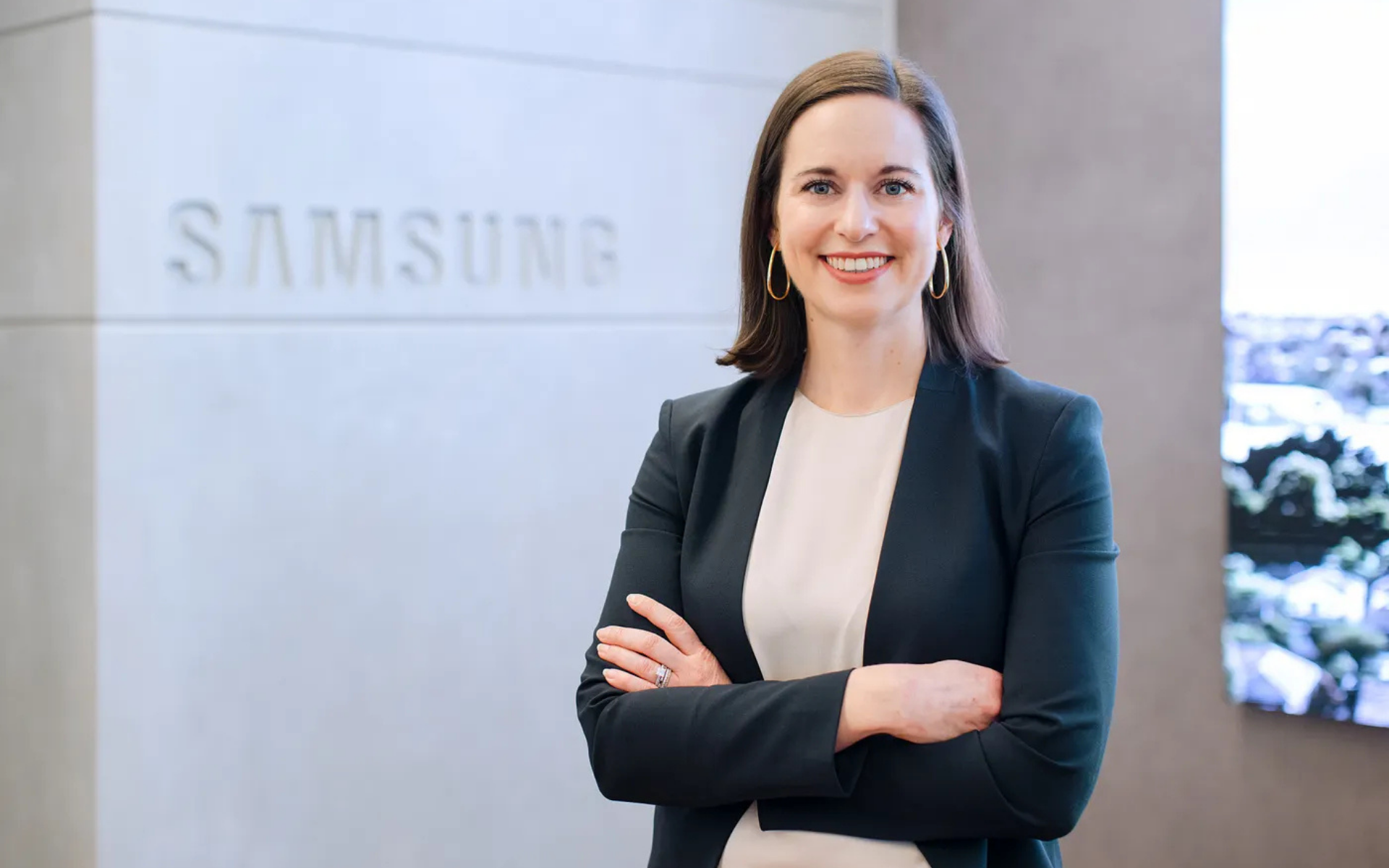
This clarity isn’t happening by accident. It’s the result of a 16-year initiative that’s quietly reshaped how young people think about innovation, and how they see themselves in the process. As Samsung CMO Allison Stransky put it:
“We have the power of scale, brand recognition, amazing technology. We have a lot of things at our disposal. So we do really think that we have not just a responsibility, but a privilege to use where we sit to give back.”
Privilege. Purpose. Accountability. Samsung’s framing is refreshingly direct for a tech giant operating in an era of justified skepticism.
Teachers Are Ready for AI, They Just Don’t Have the Playbook
Before we get lost in the marvel of student innovation, it’s worth pausing on the adults steering the ship. Teachers aren’t shying away from AI. In fact, they’re eager for it. But they’ve been asked to navigate a technological revolution with almost no guidance.
Stransky laid out the sobering truth: “73% of teachers are willing to embrace AI in the classroom, but 53% have gotten no formal training.”
It’s a bit like being handed the keys to a car, told it can fly, and then expected to teach others how to pilot it with no manual, no lesson plan, and no runway.
Samsung’s response is perfectly practical. Teacher Academy provides training that counts toward required education hours. Their AI boot camp, built with the Mark Cuban Foundation and ambassadors Mark Cuban and Emma Grede, adds deeper immersion. “We are creating an AI boot camp,” Stransky said, “to continue to learn how AI is additive and a tool for learning and for good.”
There’s no fear-mongering. No sweeping proclamations. Just a simple, steady effort to make sure educators aren’t left to fend for themselves.
Students Aren’t Scared of AI. They’re Using It to Make Life Better.
If adults tend to see AI through the lens of existential risk, students see it like a Swiss Army knife that’s multifunctional, powerful, and full of possibilities.
“In the last two years, we saw AI come into their proposals,” Stransky said, “and what that means to me is students are curious, and they are optimistic.”
Optimistic — and empathetic.
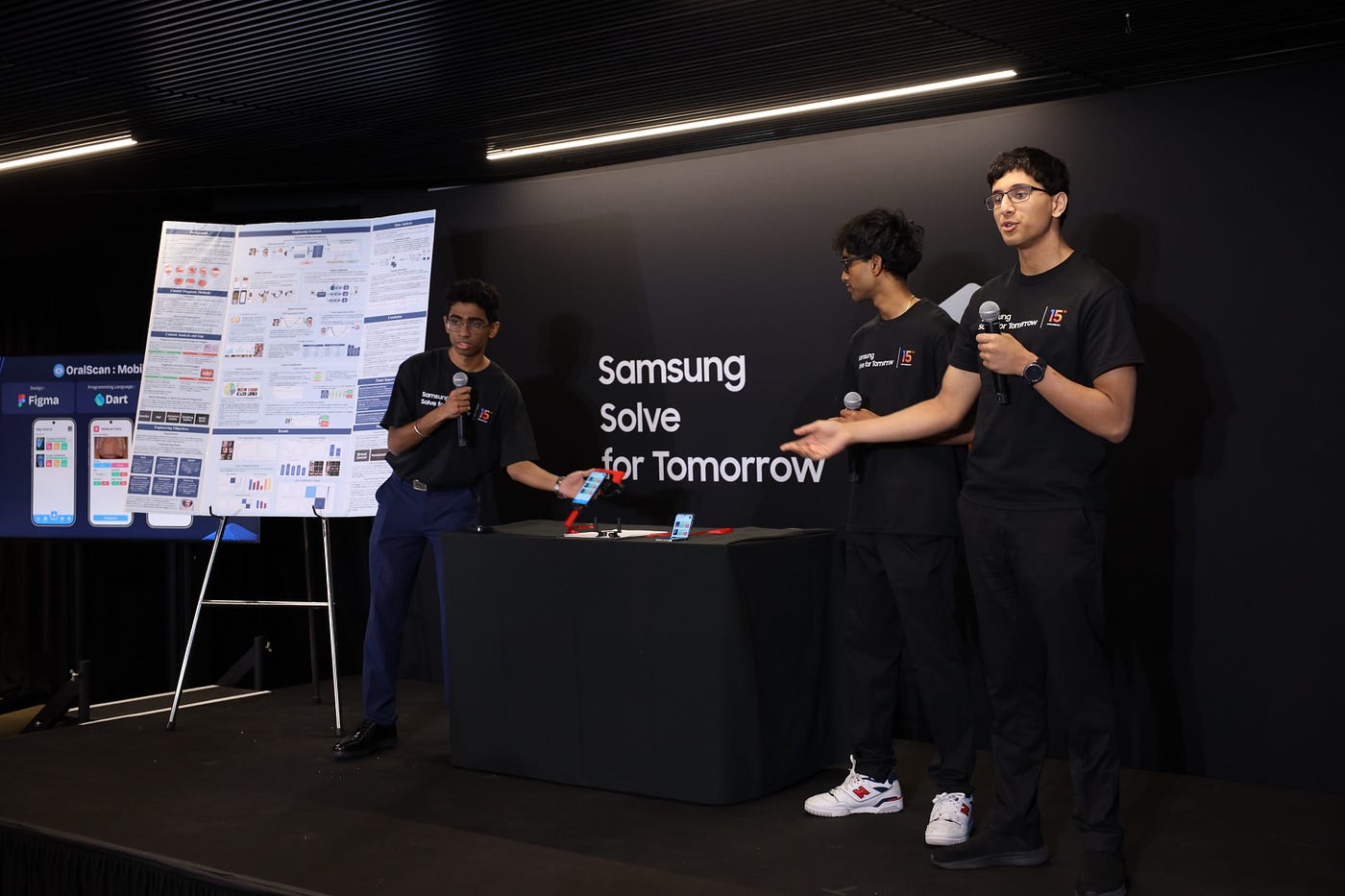
Consider the students from Bentonville West High School who developed an AI-powered oral cancer screening tool. They weren’t fixated on the technology; they were focused on the people in their community who couldn’t access a specialist. “You should be able to take a picture of something in your mouth,” Stransky explained, “and AI is really good at recognizing ‘is that a canker sore or is that the start of cancer?’”
Another team realized how many people struggle to reach doctors for wound checks, so they created an AI-enabled patch that monitors healing in real time.
A New Jersey team saw their classmate’s Mayan heritage fading and used AI to build a language-preservation robot. “They recognized that it is an at-risk language,” Stransky said. And in a stroke of emotional intelligence, they made the robot adorable. Because they knew that emotional connection is an entry point to learning.
Then there’s Cellbot — the mental-health robot that roamed the hallways, giving students a safe, anonymous way to express how they were feeling. “It created this uplifting movement within their school,” Stransky says. These aren’t moonshot ideas conjured in a lab. They’re direct responses to struggles students witness every day. They’re the future of AI when guided by compassion instead of fear.
It’s Never Just About the Tech — It’s About the Transformation
What Solve for Tomorrow does better than almost any other program is expand a student’s sense of self. Yes, they learn STEM. Yes, they learn problem-solving. But they also learn persuasion, leadership, resilience, and the art of building something that matters.
“It’s not just about the technology,” Stransky emphasized. “It’s about entrepreneurship, it’s about learning presentation skills, it’s about talking business.”
Teachers say the program changes classroom culture. Students rally around a shared goal. The quiet kid becomes the spokesperson. The outspoken one becomes the listener. Kids who’ve never thought of themselves as innovators suddenly see not only that they can contribute, but that their lived experiences give them a unique edge.
Solve for Tomorrow isn’t turning students into coders. It’s turning them into changemakers.
When a Competition Becomes an Incubator
At 16 years old, Solve for Tomorrow could’ve easily become a yearly tradition: exciting, inspiring, and self-contained. Instead, it’s evolving into something even more ambitious.
Samsung’s now offering engineering support for select student projects, helping turn prototypes into products, ideas into enterprises. “Samsung is dedicating engineering support to help get some of these projects off the ground,” Stransky said. “It’s a new level of creation.”
This shift is no small thing. It means a global company is putting its resources behind the inventions of teenagers. It means the next breakthrough in health access or cultural preservation might come from a middle school classroom — not a Silicon Valley lab.
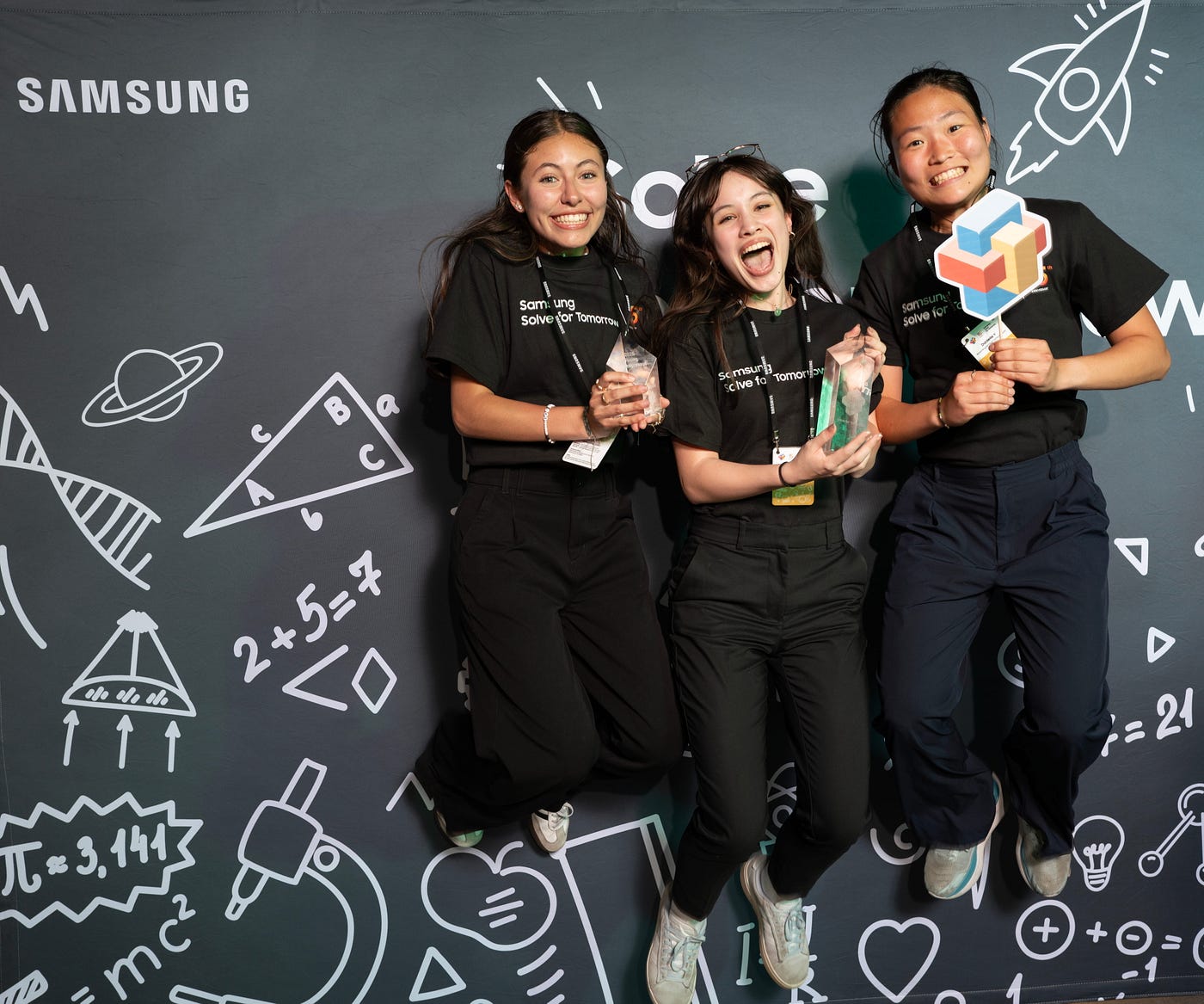
That diversity and depth of impact keep expanding as Samsung awards prizes totaling $2 million across 500 schools, as Semi-Finalists were selected for the 16th Solve For Tomorrow this year. From a nationwide pool of thousands of applications, these teams were selected to represent every state and the District of Columbia. Their projects stood out for combining community-driven thinking with emerging technologies such as AI, robotics, and sustainable solutions to address real-world needs.
The enthusiasm inside Samsung is equally contagious. “Teams come out of the woodwork and say, ‘How can we help?’” she said.
A Company With Feet on the Ground, Not Head in the Clouds
Samsung’s corporate culture is famously understated. No larger-than-life CEO. No theatrics. No self-mythologizing. As Stransky put it, “We’ve never had a celebrity CEO. Our celebrity is the product.” That humility has shaped the company’s public posture for years, but it’s also kept Solve for Tomorrow quieter than its impact deserves. That’s beginning to change.
“We can do more impact if more people know about it,” she said. Not as a marketing ploy. As a truth. Awareness can scale good ideas just as effectively as capital. Samsung’s not trying to build a monument to itself. It’s trying to widen the circle of opportunity.
A Moment That Crystallized Everything
When asked what convinced her of the program’s deeper significance, Stransky didn’t hesitate. She went back to the first time she watched the finalists present in person.
“Ten different teams…the breadth and depth were incredible,” she said. “Wow, these kids are incredible.” Light pollution. Farmer safety. Accessible board games. Climate science. Mental health. These students weren’t tackling hypothetical scenarios, they were fixing the problems right in front of them.
“With a little bit of nudging,” she said, “these kids are going to be changing the world.” It didn’t sound like a platitude. It sounded like a fact.
A Blueprint for Responsible AI, Written By Kids
The world talks about AI in massive, abstract terms — global labor markets, geopolitical power, existential risk. Solve for Tomorrow reminds us that AI’s most immediate impact may come not from billion-dollar models but from small, ingenious solutions rooted in empathy.
The kids in this program aren’t waiting for permission to shape the future. They’re already doing it. They’re showing us what AI can look like when humanity leads — when the goal isn’t to outsmart each other, but to uplift one another.
Samsung isn’t choreographing the dance. It’s setting the stage. It’s giving young innovators the tools, trust, and platform they need to build what they believe the world is missing.
And the result is clear: these students aren’t just learning to use AI. They’re learning to humanize it. They’re reminding the rest of us that technology’s highest calling isn’t efficiency — it’s empathy.
And if that’s the future they’re building, we’re in very good hands.
Colleen Anderson is Marketing Head at We First AI, specializing in AI strategy, brand positioning, and market engagement. She helps organizations turn complex AI innovation into clear, trusted, and impactful business narratives.
Related Articles





NO PROMPT REQUIRED.
JUST REACH OUT.

