

AI—The Great Equalizer


We’re living through a defining paradox: AI is advancing faster than our moral imagination. And nowhere is that gap more consequential than in social impact.
Many approach AI like early social media—flashy and vaguely necessary. But the leaders who will shape this decade understand a deeper truth: AI is not the mission. AI is the force multiplier for the mission.
Healing communities, restoring ecosystems, and expanding opportunity begin and end with people. Purpose is human. Trust is human. Dignity is human. Technology simply amplifies our capacity to deliver on those commitments.
When done well, AI becomes a great equalizer. It gives rural students tutors, helps farmers anticipate weather, supports low-income families, and assists health workers in early disease detection. Yet we must face the uncomfortable truth: AI can scale harm faster than humans can fix it. Biased data can misdirect aid, discriminate in hiring, and surveil communities instead of supporting them. These are not edge cases—they are predictable outcomes when tools are built without lived experience, participation, or guardrails.
So the responsibility of purpose-driven leaders is clear: design the system around people, not people around the system. Co-design with frontline workers. Pilot before scaling. Involve affected communities. Treat data equity as a justice issue.
Governance is now a leadership competency. Boards and CEOs cannot outsource judgment to vendors or compliance. In a volatile AI landscape, purpose becomes the compass. Lose it, and speed becomes recklessness.
When used wisely, AI removes the invisible burden of impact—the paperwork, analysis, and administrative grind—so humans can do what only humans can do: listen, empathize, and advocate.
This is the shift from automation to augmentation. AI shouldn’t replace teachers—it should help them understand how students learn. It shouldn’t replace case managers—it should help them prioritize who needs support first. It shouldn’t replace leaders—it should accelerate their ability to serve.
The future of social innovation isn't human vs. machine. It's human + machine, working in co-agency—each doing what it does best.
That’s why forward-thinking organizations aren’t asking, “How do we use AI?”They are asking, “Who will we become with AI?”Purpose-driven AI is not a slogan—it’s an operating system. It translates values into workflows, ethics into incentives, and accountability into structure. When aligned with a movement mindset, it becomes one of the greatest accelerants of human progress.
The next decade will reward leaders who treat AI not as a shortcut or a trend—but as a sacred responsibility to do more good, more quickly, for more people than ever before.
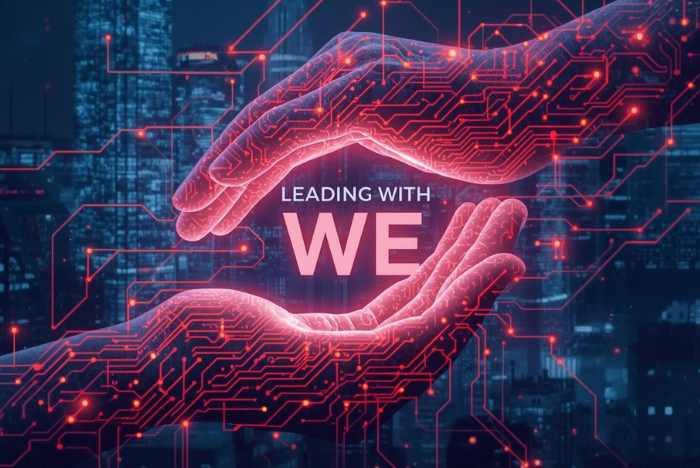
That is how we Lead With We—in the age of AI.
Colleen Anderson is Marketing Head at We First AI, specializing in AI strategy, brand positioning, and market engagement. She helps organizations turn complex AI innovation into clear, trusted, and impactful business narratives.
Related Articles




NO PROMPT REQUIRED.
JUST REACH OUT.

