

What Separates AI Companies That Get Trusted From Those That Just Get Noticed

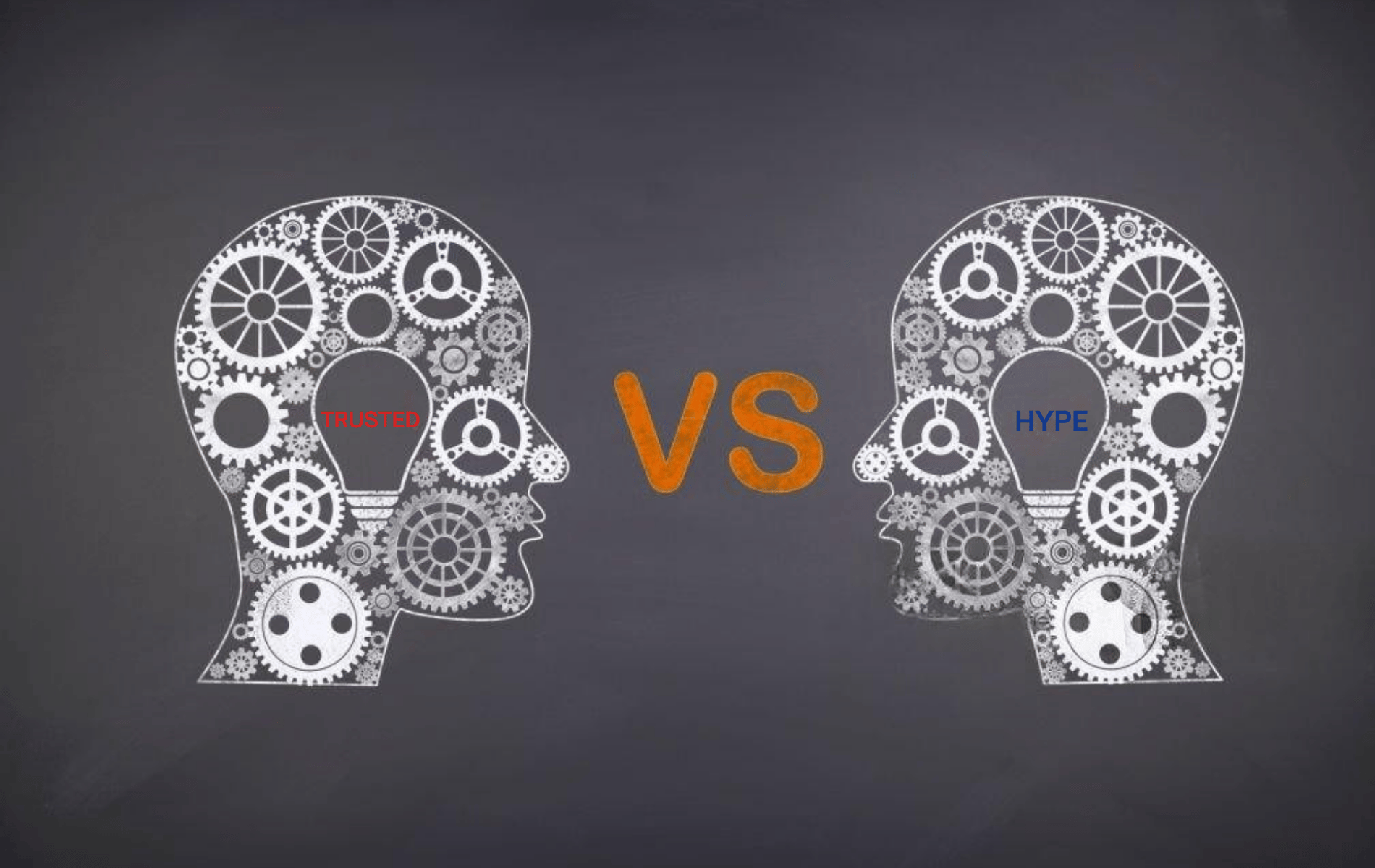
Capability gets attention. Belief earns adoption. And right now, a lot of AI companies have the first without the second.
It's a pattern worth understanding. A company has a genuinely strong product, real technical depth, and a team that knows what it's doing. Buyers can see all of that. They can follow the demo, understand the use case, and see where it fits. And they still hesitate. Not because the product isn't good enough, but because something in the story around it hasn't landed. They understand what the product does. They're not yet sure what the company stands for.
That distinction is doing a lot of work in enterprise AI right now. Because buyers aren't just evaluating technology. They're evaluating judgment. They want to know how the company thinks about risk, where it draws lines, and what it believes AI should and shouldn't do. When those signals are absent or inconsistent, even a strong offer starts to feel uncertain. The hesitation isn't irrational. It's the market asking a question the narrative hasn't answered yet.
Most companies respond to this by improving their messaging, tightening the website copy, sharpening the pitch deck, and aligning the sales scripts. That work has value, but it addresses the symptom rather than the cause. Messaging explains what you do. Belief explains why you matter. In a market where every vendor is reaching for the same vocabulary, efficiency, automation, intelligence, and scale, messaging alone doesn't create distinction. Conviction does.
A strategic narrative is the structure that holds conviction in place, grounded in how strategic management shapes business decisions. Not a tagline, not a campaign, not something you layer onto the product after it's built. It's the connective tissue between what the product does, what the company believes, and why the market should trust the combination. When that structure is clear, everything downstream gets easier: sales conversations, internal alignment, category positioning, investor confidence. When it's missing, the business has to work harder at every stage to compensate for a gap that sits further upstream than most teams realize.
This is also where a clearly defined AI Brand Architecture plays a critical role, ensuring that narrative, product positioning, and portfolio logic stay aligned instead of fragmenting across teams and touchpoints.
One of the places this shows up most visibly is across internal teams. The product talks about functionality. Sales talks about ROI. Marketing talks about transformation. Leadership talks about vision. Each conversation might hold on its own, but a buyer moving through all of them is assembling a picture the company should have already provided. That fragmentation doesn't read as complexity. It reads as a company still working out what it stands for, which in enterprise buying environments is enough to introduce doubt precisely when confidence matters most.
In regulated AI, the stakes are higher still. Buyers in those markets are watching for something beyond performance. They want to see how the company thinks about responsibility, where human oversight sits in the system, and how claims are bounded and supported. When those signals aren't present, the company doesn't just seem unclear. It starts to seem like a liability.
What a strong narrative does is give the business a shared center that travels. Leadership can express it. Product supports it. Sales uses it. Brand extends it without distorting it. The story stays coherent whether a buyer is reading the website, sitting in a demo, or hearing a second-hand summary from a colleague who attended a conference session six months ago. That kind of durability is rare, and it's exactly what enterprise buyers are looking for when they're trying to justify a decision internally.
Early traction tends to obscure the absence of that foundation. When the technology feels novel, buyers extend interpretive generosity. They ask more questions, they lean in, and they're willing to do some of the work of understanding the company's position themselves. Scale removes that patience. More stakeholders are involved in each decision, more scrutiny on differentiation, and more pressure on every team to explain the company consistently and compellingly without the founder in the room.
The companies that navigate that transition well are the ones that treated narrative as infrastructure rather than an afterthought. They understood that in a crowded market, being heard is not the hard part. Being believed is.
Colleen Anderson is Marketing Head at We First AI, specializing in AI strategy, brand positioning, and market engagement. She helps organizations turn complex AI innovation into clear, trusted, and impactful business narratives.
Related Articles





NO PROMPT REQUIRED.
JUST REACH OUT.

